

Exploring the Vocal News Media content platform.
A website name can create expectations before you even open the homepage. The word “news” may suggest breaking stories and investigative reporting, while “media” can imply videos, interviews, and professional journalism. However, the reality is often more complicated.
VocalNewsMedia com is a multi-topic content website featuring articles on business, technology, health, education, lifestyle, entertainment, home improvement, trading, automobiles, and other general subjects. Its content mix makes it closer to a broad online magazine or general-interest blog than a dedicated newsroom.
This guide explains what readers can find on the platform, how it differs from a conventional news outlet, and how to evaluate its articles before relying on them.
What Is VocalNewsMedia Com?
VocalNewsMedia com is an online publishing website that organizes articles across numerous categories. Recent homepage content has included salon operations, water-heater replacement, workplace team-building, customer-service systems, shipping guidance, and other practical subjects.
The site also has dedicated sections covering areas such as:
- Business
- Technology
- Health
- Education
- Entertainment
- Lifestyle
- Home improvement
- Cryptocurrency
- Trading
- Automobiles
- Online games
- General information
This variety suggests that the platform targets readers with different interests rather than building its identity around one specialist subject.
It is important not to confuse this website with Vocal Media, a separate creator-focused platform where users can publish stories and build an audience. The similar wording may cause confusion, but the two websites operate under different domains and present different publishing models.
What Type of Content Does the Website Publish?
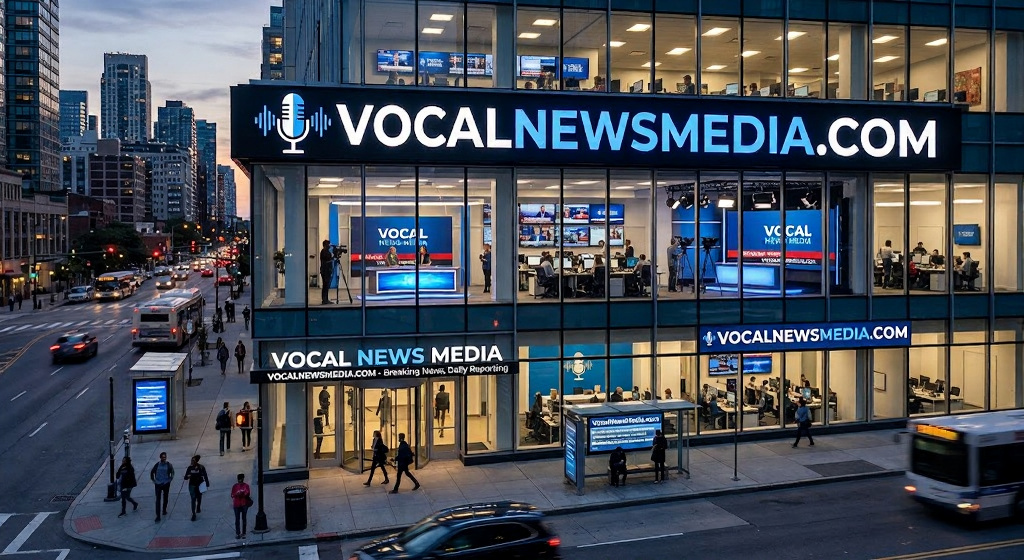
The website’s library combines practical guides, informational articles, commercial topics, trend-based posts, and older news-style content. Readers may therefore encounter very different levels of subject depth from one category to another.
| Content area | Typical subjects | Best use |
|---|---|---|
| Business | Customer service, workplace activities, salon operations | General ideas and introductory guidance |
| Technology | Artificial intelligence, digital tools and online services | Learning basic concepts |
| Health | Recovery, therapy and wellness-related subjects | General reading, not diagnosis |
| Education | Online learning, study habits and admissions | Starting research |
| Home | Repairs, decoration and property improvements | Practical inspiration |
| Finance and trading | Gold products, crypto exchanges and markets | Basic explanations requiring verification |
| Entertainment | Films, online platforms and popular culture | Casual reading |
| News | Recruitment notices and general updates | Initial awareness, followed by source checking |
Some category pages contain older material alongside newer posts. For example, the home section includes articles dated from 2022 through 2025, while the homepage displayed several posts from May 2026 when reviewed.
That does not automatically make older articles useless. A guide to decorating a room may remain helpful for years. However, recruitment notices, software information, prices, legal rules, medical guidance, and financial topics can become outdated quickly.
Is It a Traditional News Organization?
Not in the conventional sense, based on its visible content structure.
A traditional news organization normally emphasizes original reporting, named editors, corrections, sourcing standards, field reporting, and timely coverage of public events. This website appears to place greater emphasis on general informational and search-friendly articles across a wide selection of subjects.
Its news category, for example, has included recruitment-related posts, while other areas contain evergreen guides and commercially oriented topics.
A more accurate description would be:
A multi-category digital publication offering general articles, practical guides and occasional news-style updates.
That distinction matters because the word “news” in a domain name does not independently prove that every page follows professional journalistic standards.
Main Features Readers May Find Useful
Wide Topic Selection
A broad category structure makes it possible to explore several subjects without moving between many websites. Someone might read a technology explainer, a home-maintenance guide, and a business article during the same visit.
The disadvantage is that expertise may vary between topics. A website covering dozens of unrelated fields needs particularly strong author information, editorial review, and sourcing to establish authority in each field.
Simple Article Format
The indexed pages generally use recognizable article elements such as headings, short paragraphs, category labels, publication dates, author names, and links to related posts. This familiar layout can make content easier to scan.
Beginner-Friendly Explanations
Many topics appear to be written for general readers rather than specialists. That can be useful when someone needs a basic definition or overview before moving to more authoritative material.
A Mix of New and Archived Posts
The platform contains content published across several years. This provides a larger archive, but it also means readers should check each article’s date instead of assuming every page reflects current conditions.
How Reliable Is the Information?
Reliability should be assessed article by article rather than assigned to an entire domain with a simple “safe” or “unsafe” label.
During this review, the publicly indexed pages showed author names and publication dates. However, those elements alone do not establish the writer’s credentials or prove that an article has been professionally fact-checked.
Before trusting a page, examine the following signals.
1. Author Transparency
Look for a detailed author profile explaining relevant experience, qualifications, or subject knowledge. A name without a biography gives readers limited information about why the writer should be trusted.
2. Supporting Sources
Strong informational articles link to original research, official organizations, government pages, recognized institutions, or direct evidence. Be cautious when a page makes precise claims but provides no traceable source.
3. Publication and Update Dates
Check when the article was first published and whether it has been reviewed recently. This is especially important for:
- Medical advice
- Financial products
- Cryptocurrency
- Laws and regulations
- Employment notices
- Product specifications
- Software instructions
- Travel requirements
4. Editorial Information
Look for accessible pages explaining ownership, editorial standards, corrections, contact details, privacy practices, and how sponsored content is handled. Greater transparency makes it easier to understand who is responsible for the content.
5. Agreement With Authoritative Sources
Confirm important claims through independent sources. For example, health information should be checked against recognized medical institutions, while recruitment information should be verified on the employer’s official website.
How to Use the Website Responsibly
The website can be useful as a starting point when you want an introduction to a topic. The safest approach is to treat its articles as discovery material rather than automatic final proof.
A practical reading process looks like this:
- Read the article to understand the basic subject.
- Identify the major factual claims.
- Open any sources cited by the writer.
- Check the publication date.
- Compare the information with at least one independent authority.
- Avoid making high-impact decisions from one article alone.
Suppose you find a post comparing gold exchange-traded funds with gold mutual funds. It may help you understand the basic difference, but investment fees, taxation, risk, eligibility, and regulations should be confirmed through current financial documents or a qualified professional. The site has published content in this area, so careful verification is especially relevant.
The same rule applies to health content. An article can introduce recovery options, but it cannot replace advice from an appropriately qualified healthcare professional.
Strengths and Limitations
Potential Strengths
- Covers many popular subjects
- Provides introductory explanations
- Uses a familiar blog-style structure
- Includes dated posts and category pages
- May help readers discover unfamiliar terms
- Offers both practical and general-interest content
Possible Limitations
- The broad topic range can make subject expertise difficult to judge
- Older pages may no longer reflect current facts
- Some articles may require stronger primary sourcing
- A news-style name may create expectations of original journalism
- Author credentials and editorial processes should be checked
- High-stakes claims need independent confirmation
A balanced assessment recognizes both sides. A general-content site does not need to be a major newsroom to provide value, but readers should understand what type of value it offers.
Why Search Results Contain So Many Guides About It
Current search results include numerous third-party pages describing or reviewing the website. Many use similar headings about its features, benefits, content categories, safety, or legitimacy.
This pattern creates an important challenge: repetition across several websites does not necessarily make a claim true. Some competing pages make confident statements about platform quality, user experience, security, or services without showing clear evidence.
Readers should prioritize:
- Direct observations from the actual website
- Official policy and contact pages
- Traceable primary sources
- Clearly qualified statements
- Evidence instead of repeated marketing language
This evidence-first approach is also consistent with Google’s current guidance. Google says its systems aim to prioritize helpful, reliable, people-first content rather than pages primarily made to manipulate rankings. It also recommends creating unique, non-commodity material for visibility in both traditional and generative search experiences.
Is the Website Safe to Visit?
A responsible review cannot guarantee that any website is completely safe at all times. Security status, advertisements, external links, ownership, and site configuration can change.
Use normal browsing precautions:
- Confirm that you are visiting the correctly spelled domain.
- Avoid downloading unexpected files.
- Do not enter sensitive personal or payment information without a clear reason.
- Review privacy and contact information before submitting a form.
- Be cautious with advertisements and unfamiliar external links.
- Keep your browser and security software updated.
A working HTTPS connection can help protect data moving between your browser and the website, but HTTPS does not prove that every article is accurate or that every external link is trustworthy.
Who May Find the Platform Helpful?
The website may suit:
- Casual readers exploring general topics
- Students beginning basic research
- Bloggers looking for topic ideas
- Homeowners seeking introductory guides
- Professionals reading broad business content
- Readers who prefer simple explanations
It is less suitable as the only source for academic research, medical decisions, investments, legal questions, urgent news, or official employment information.
Conclusion
VocalNewsMedia com appears to function as a broad digital publication containing informational articles across business, technology, health, education, lifestyle, home, entertainment, finance, and other categories.
Its greatest advantage is variety. Readers can quickly discover and understand unfamiliar topics through accessible articles. Its main limitation is that a broad publishing model requires readers to examine expertise, sourcing, dates, and editorial transparency carefully.
Use the platform for initial learning and topic discovery, but verify important claims through current, authoritative sources. That approach provides the convenience of general online content without treating every published statement as established fact.
FAQs
What is VocalNewsMedia com used for?
It is used for reading general-interest articles, practical guides, business content, technology explainers, lifestyle posts, health topics, education material, and occasional news-style updates.
Is it the same as Vocal Media?
No. Vocal Media operates on a different domain and presents itself as a creator platform where people can publish stories and build audiences.
Is every article on the website current?
Not necessarily. Its category pages include posts from different years, so readers should check the publication date and confirm time-sensitive facts independently.
Can I use it for academic research?
It may help you discover a topic, but academic work should rely mainly on peer-reviewed research, official documents, books, government sources, and recognized institutions.
Does the website publish only breaking news?
No. Its visible content includes evergreen guides, business articles, home topics, technology explainers, education posts, entertainment content, and other general information.
Should I trust its health or financial articles?
Use them as introductory reading only. Verify health claims with qualified medical sources and financial claims with current official documents or an appropriately qualified professional.
For more updates visit: Hiding Me