
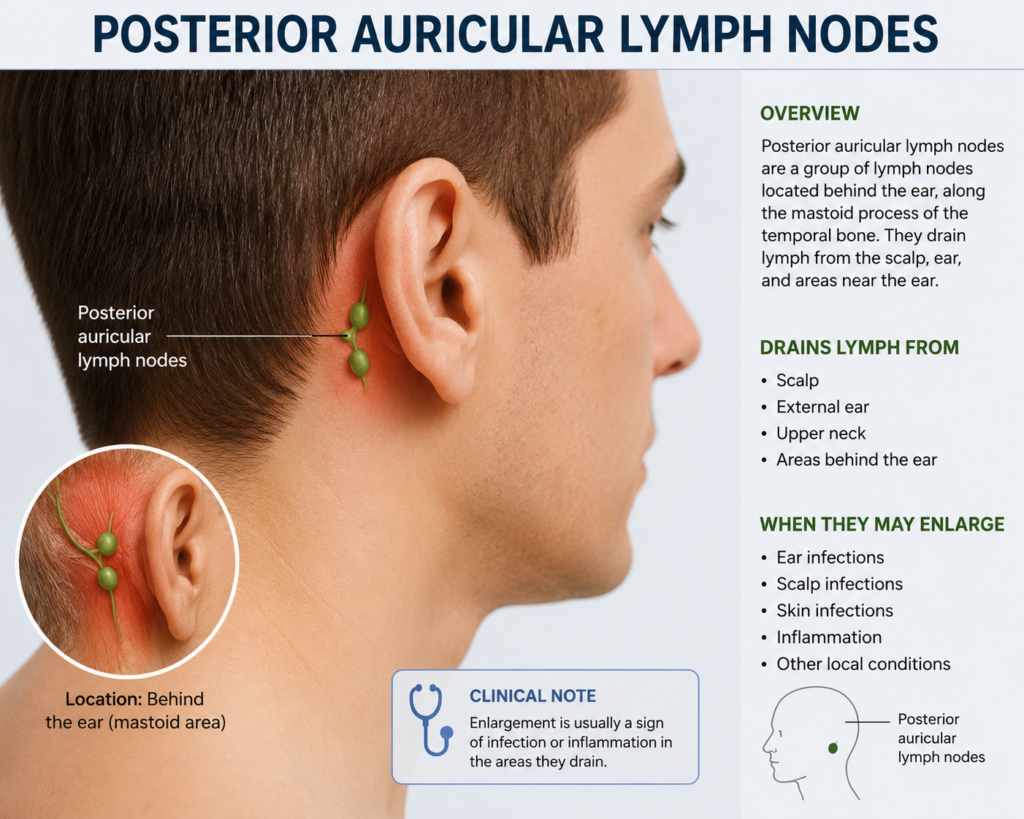
Illustration showing lymph nodes located behind the ear.
A small lump behind your ear can be surprising, especially if it appears suddenly. In many cases, it involves the posterior auricular lymph nodes, tiny immune system structures that help protect your body from infection. Although they usually go unnoticed, these lymph nodes can become swollen when they’re actively fighting germs.
Most swollen lymph nodes are harmless and improve once the underlying illness resolves. However, persistent swelling, severe pain, or other concerning symptoms may require medical evaluation.
This guide explains where these lymph nodes are located, why they become enlarged, common causes, symptoms, diagnosis, treatment options, and when it’s time to see a healthcare professional.
What Are Posterior Auricular Lymph Nodes?
Posterior auricular lymph nodes are small, bean-shaped glands located just behind the ear, close to the mastoid bone. They are part of the body’s lymphatic system, a network that helps remove waste, filter harmful organisms, and support immune function.
Normally, these lymph nodes are so small that they cannot be felt. They become more noticeable only when they enlarge due to infection, inflammation, or, less commonly, other medical conditions.
Where Are They Located?
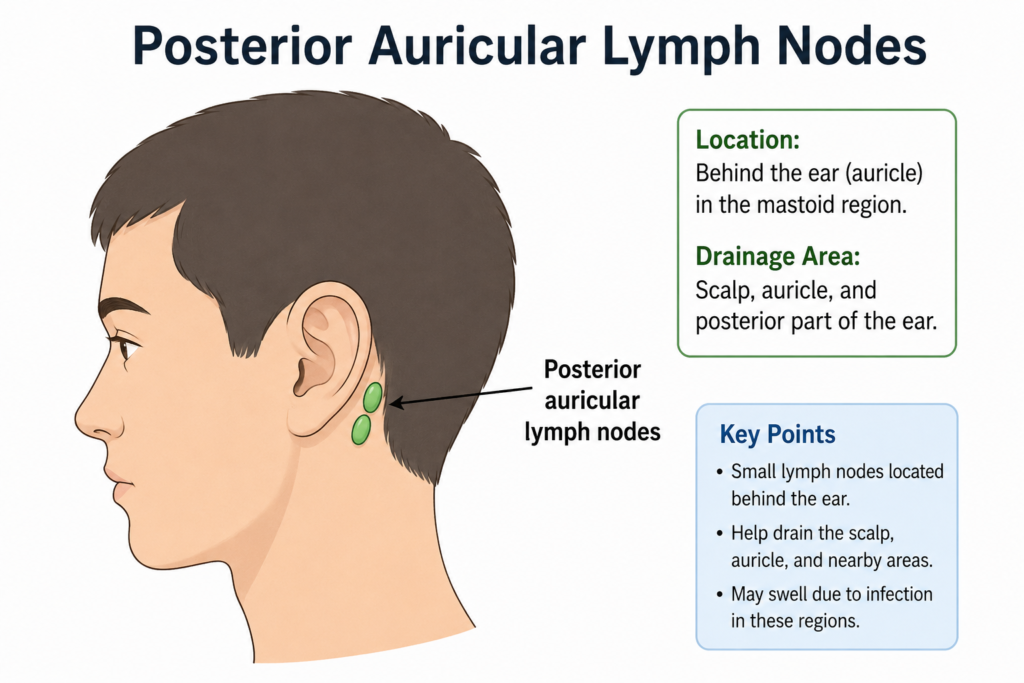
These lymph nodes sit behind the outer ear, near where the ear meets the skull.
They mainly collect lymphatic fluid from:
| Area | Drains Into These Lymph Nodes |
|---|---|
| Scalp behind the ear | Yes |
| Upper neck skin | Yes |
| Outer ear | Yes |
| Part of the scalp | Yes |
| Nearby soft tissues | Yes |
Because they drain these areas, infections affecting the scalp, ear, or nearby skin often cause them to swell.
What Do They Do?
Their primary role is to support your immune system by:
- Filtering bacteria and viruses
- Trapping harmful microorganisms
- Producing immune cells
- Helping fight infections
- Removing damaged cells and debris
Think of them as security checkpoints that monitor fluid traveling through the lymphatic system.
Common Causes of Swelling
Swollen lymph nodes are usually a sign that your immune system is responding normally.
Ear Infections
Middle ear or outer ear infections frequently cause swelling behind the ear because the affected area drains into these lymph nodes.
Common symptoms include:
- Ear pain
- Reduced hearing
- Ear drainage
- Fever
Scalp Infections
Problems affecting the scalp are another common cause.
Examples include:
- Infected cuts
- Insect bites
- Folliculitis
- Ringworm of the scalp
- Skin abscesses
Skin Infections
Cellulitis or infected wounds around the head and neck may enlarge nearby lymph nodes.
Viral Illnesses
Several viral infections may cause swollen lymph nodes throughout the body, including behind the ears.
Examples include:
- Common cold
- Influenza
- COVID-19
- Rubella
- Infectious mononucleosis
Dental Problems
Although less common, severe dental infections can sometimes contribute to swollen lymph nodes in nearby regions.
Autoimmune Diseases
Conditions that cause chronic inflammation may enlarge lymph nodes.
Examples include:
- Lupus
- Rheumatoid arthritis
Cancer (Less Common)
Persistent enlarged lymph nodes may occasionally be associated with:
- Lymphoma
- Leukemia
- Skin cancers
- Head and neck cancers
- Cancer spread from another location
Fortunately, infections remain a much more common explanation than cancer.
Symptoms
Symptoms depend on the underlying cause.
You may notice:
- Lump behind the ear
- Tenderness
- Mild pain when touching the area
- Swelling
- Warm skin
- Fever
- Fatigue
- Sore throat
- Ear discomfort
- Scalp irritation
Healthy lymph nodes are usually:
- Small
- Soft
- Difficult to feel
- Not painful
What Does a Swollen Node Feel Like?
People often describe it as:
- Pea-sized
- Bean-shaped
- Soft or slightly firm
- Tender when pressed
A node that is painful and appears during an infection is generally less concerning than one that continues enlarging without an obvious reason.
Common Conditions Associated With Swelling
| Condition | Typical Symptoms |
|---|---|
| Ear infection | Ear pain, fever |
| Scalp infection | Redness, itching |
| Viral illness | Fever, fatigue |
| Skin infection | Warm, swollen skin |
| Rubella | Rash, fever |
| Mononucleosis | Severe fatigue, sore throat |
| Autoimmune disease | Joint pain, inflammation |
| Cancer | Persistent painless swelling, weight loss |
How Doctors Diagnose the Problem
Diagnosis begins with a medical history and physical examination.
Your healthcare provider may ask:
- When did the swelling start?
- Is it painful?
- Have you recently been sick?
- Any scalp injury?
- Ear infection?
- Fever?
- Weight loss?
Additional tests may include:
Physical Examination
Doctors assess:
- Size
- Firmness
- Mobility
- Tenderness
- Number of swollen nodes
Blood Tests
These may identify:
- Infection
- Viral illnesses
- Immune disorders
Imaging
Sometimes imaging helps evaluate enlarged lymph nodes.
Possible tests include:
- Ultrasound
- CT scan
- MRI (less commonly)
Biopsy
If swelling persists or appears suspicious, a small tissue sample may be examined to determine the cause.
Treatment Options
Treatment depends entirely on what caused the swelling.
For Bacterial Infections
Doctors may prescribe antibiotics if a bacterial infection is confirmed.
Viral Illnesses
Most viral infections improve with:
- Rest
- Hydration
- Fever control
- Time
Antibiotics do not treat viral infections.
Pain Relief
Over-the-counter pain relievers may help reduce discomfort if appropriate for you. Always follow dosing instructions or your healthcare provider’s advice.
Warm Compress
Applying a warm compress for 10 to 15 minutes several times daily may reduce discomfort.
Treat the Underlying Condition
Whether it’s a scalp infection, ear infection, or skin irritation, resolving the primary problem usually allows the lymph node to return to normal size.
When Should You See a Doctor?
Seek medical evaluation if:
- Swelling lasts longer than two to four weeks
- The lump continues growing
- It becomes extremely painful
- High fever develops
- You have night sweats
- Unexplained weight loss occurs
- The node feels very hard or fixed in place
- Multiple lymph nodes become enlarged
- There is no obvious infection
Prompt evaluation helps identify both common and uncommon causes.
Can You Prevent Swollen Lymph Nodes?
While not every cause is preventable, you can reduce your risk by:
- Treating ear infections early
- Keeping scalp wounds clean
- Washing hands regularly
- Staying current with recommended vaccinations
- Managing chronic medical conditions
- Seeking treatment for persistent skin infections
Myths vs Facts
| Myth | Fact |
|---|---|
| Every swollen lymph node means cancer. | Most swollen lymph nodes result from infection. |
| They should never be painful. | Tender nodes commonly occur during infections. |
| Antibiotics always fix swollen nodes. | Antibiotics help only bacterial infections. |
| A lump behind the ear is always dangerous. | Many cases are temporary and harmless. |
| Swollen nodes should disappear overnight. | They may take several weeks to return to normal. |
ALSO READ: Best Ensalada de Apio y Manzana Near Me A Fresh Guide
Conclusion
The posterior auricular lymph nodes play an important role in protecting the body against infection. Swelling usually indicates that your immune system is responding to an illness involving the ear, scalp, or nearby skin. Most cases improve as the underlying condition resolves.
However, persistent, enlarging, painless, or unusually firm lymph nodes deserve prompt medical evaluation. Paying attention to accompanying symptoms and seeking care when necessary helps ensure appropriate treatment and peace of mind.
FAQs
Where are posterior auricular lymph nodes located?
They are located behind the ear near the mastoid bone and drain lymph from parts of the scalp, outer ear, and nearby skin.
Why do they become swollen?
They usually enlarge because of infections affecting the ear, scalp, skin, or viral illnesses. Less commonly, autoimmune diseases or certain cancers may be responsible.
Are swollen lymph nodes behind the ear dangerous?
Most are not dangerous and improve after the underlying infection clears. Persistent or unexplained swelling should be evaluated by a healthcare professional.
How long does swelling usually last?
Many swollen lymph nodes begin shrinking within a few weeks after the illness improves, although complete resolution can sometimes take longer.
Can stress cause swollen lymph nodes?
Stress alone does not typically enlarge lymph nodes, but illnesses that occur during periods of stress may indirectly contribute.
Should I massage a swollen lymph node?
Massaging is generally not recommended because it may increase irritation. Follow your healthcare provider’s advice instead.
For more updates visit: Hiding Me